
Coffee Journey
The journey of coffee from seed to cup | Woods Specialty Coffee Roastery
Behind every cup of specialty coffee is a moment of reflection, a story that began long before the beans reached the roastery or the coffee shop.
A story that begins in a distant land, where coffee seeds are carefully planted and monitored at every stage, to eventually turn into a crop that carries its own flavor and the identity of its source.
Coffee beans undergo numerous stages, each playing a role in shaping their taste and aroma; from planting and harvesting, to processing and roasting, then grinding and brewing. With this journey complete, the cup reaches your hand imbued with the details of effort, expertise, and care, making each sip a truly rewarding experience.
coffee fruit
Coffee begins its journey inside a cherry-like fruit known as a coffee cherry . Each cherry typically contains two seeds that represent coffee beans, encased in layers that protect them during the early stages of growth.
Agriculture and Growth
When a farmer decides to adopt coffee as a main crop, a long journey of patience begins; the coffee tree needs at least three years before it gives its first harvestable crop.
harvest
Most coffee harvesting is done manually, while machines are used in limited cases due to the nature of the terrain and the varying degrees of fruit ripeness.
Manual harvesting is done in one of two ways:
- Selective picking: Hand-picking ripe cherries, which is the most accurate and highest quality method.
- Mass picking: Collecting all the cherries from the branch at once, regardless of their degree of ripeness.
The first method is considered the best way to obtain high-quality coffee beans .
Treatment
After harvesting, the processing stage begins, which is done in one of three main ways :
Natural drying treatment
Whole coffee cherries are dried on raised beds under the sun, resulting in coffee with complex and intense fruity flavors .
Washed treatment
The coffee fruit is completely removed using specialized tools, then the beans are washed to remove the gelatin, before being dried.
This method produces a clearer, less fruity cup compared to the natural method.
Honey treatment
It represents a combination of the two previous methods; the outer husk is removed without washing the beans, leaving the gelatinous substance during drying, which gives the coffee a distinctive balance between sweetness and clarity .
In all methods, the coffee is dried until the moisture content reaches 10–14% , then stored in special silos for at least 15 days , after which the husk is removed and the beans are sorted according to quality.
Fermentation Overview
Fermentation is a key component in many food products such as bread and yogurt, where the process relies on microorganisms feeding on sugars , producing compounds that affect taste and appearance.
In coffee, fermentation plays a pivotal role in flavor formation; natural yeasts and bacteria feed on the sugars in the gelatinous substance around the coffee, producing acids and compounds that are absorbed by the bean and later appear as distinctive notes after roasting.
These microorganisms cease to be active when the grain's moisture content reaches about 14% .
Fermentation in an anaerobic environment
In anaerobic fermentation, coffee is deprived of oxygen, which achieves two main benefits:
- Slowing down the fermentation process allows for the formation of more complex flavors.
- The activity of different types of yeasts and bacteria produces distinctive flavors that differ from traditional fermentation.
When does the anaerobic fermentation stage take place?
This stage takes place at the beginning of the processing, where the coffee cherries are fermented in airtight tanks or special bags that allow carbon dioxide to escape without oxygen entering, with careful monitoring of the acidity level and temperature.
After fermentation is complete, the coffee can be processed in any of three ways: washed, natural, or honeyed.
The difference between anaerobic fermentation and carbonization
The difference between the two terms is more conventional than practical ; carbonization involves fermenting the whole cherry, while anaerobic fermentation refers to fermenting the grain after the fruit has been removed in an oxygen-free environment.
For the purposes of this article, the term anaerobic fermentation is used to refer to both methods.
Does coffee really differ?
Anaerobic fermentation requires expertise and careful monitoring , and not every experiment guarantees exceptional results.
But when it's successful, the flavors are noticeably different and more distinctive. To experience this, you can taste our latest anaerobically processed crop.
Adding flavors to the anaerobic environment
Some processing plants resort to adding fruits or spices during fermentation in order to create new flavors.
Despite the controversy surrounding this practice, at Woods we believe in preserving the identity and origin of coffee beans , and therefore we do not currently offer anaerobic coffee with added flavors.
Roasting and storage
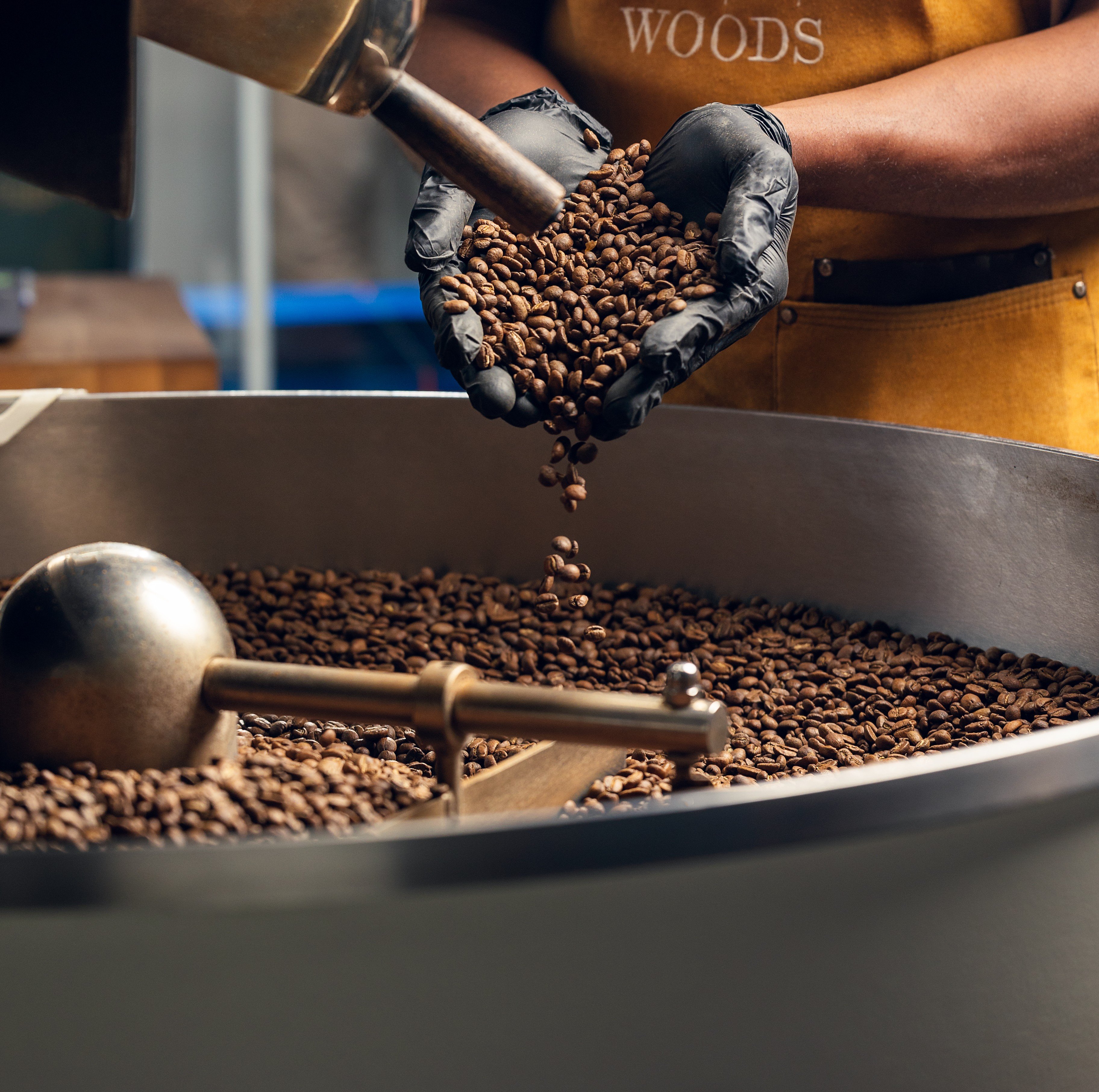
After processing is complete, the coffee is shipped long distances to the roastery, where it is carefully roasted to highlight its unique characteristics and the flavor of the region in which it originated.
Roasted coffee should be kept away from air and light, and is best consumed within 7 to 30 days of roasting to ensure the best experience.